/
/
Designing a Personalized AI Mental Health App to Improve Emotional Self-Care Consistency
Designing a Personalized AI Mental Health App to Improve Emotional Self-Care Consistency
Designing a Personalized AI Mental Health App to Improve Emotional Self-Care Consistency

MoodMate is an AI-powered therapy app designed to provide empathetic, real-time mental health support through daily check-ins, mood tracking, and personalized insights. It helps users build consistent self-care habits, gain emotional clarity, and access affordable support anytime they need it.
Project type: Personal / Concept
My role: UX Designer (End-to-end)
Timeline: 4 weeks
Tools: Figma
Designing a Personalized AI Mental Health App to Improve Emotional Self-Care Consistency
MoodMate is an AI-powered therapy app designed to provide empathetic, real-time mental health support through daily check-ins, mood tracking, and personalized insights. It helps users build consistent self-care habits, gain emotional clarity, and access affordable support anytime they need it.
Project type: Personal / Concept
My role: UX Designer (End-to-end)
Timeline: 4 weeks
Tools: Figma
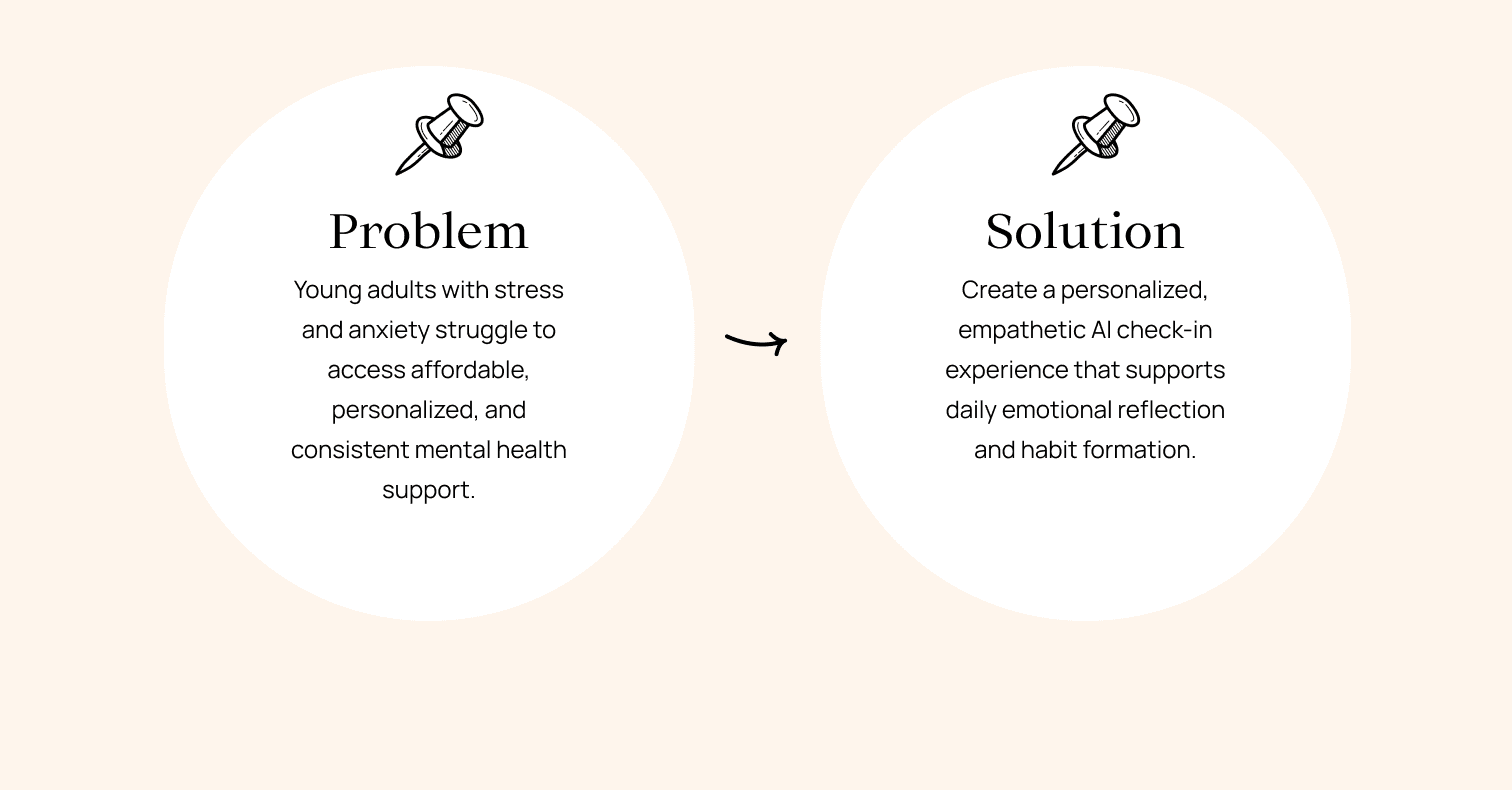
Problem Statement
Process
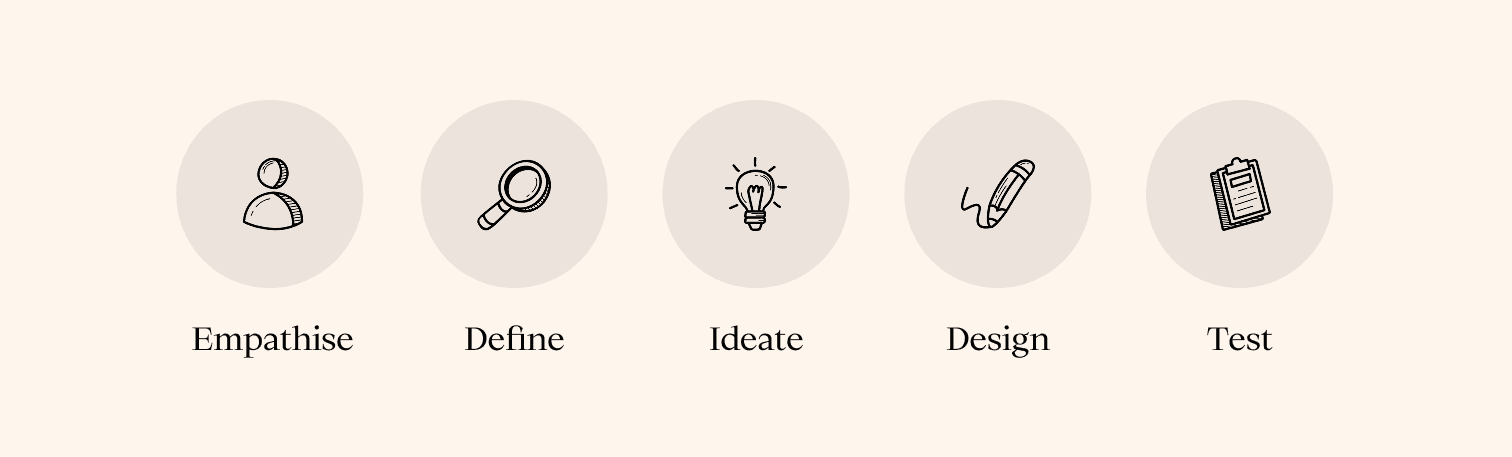
I followed a human-centered, iterative process to ensure the solution was grounded in real user needs and continuously validated through testing—especially important in a sensitive domain like mental health.
I followed a human-centered, iterative process to ensure the solution was grounded in real user needs and continuously validated through testing—especially important in a sensitive domain like mental health.

Goal:
Help people with mild–moderate mental health struggles build a consistent self-care routine.
Primary user pain:
consistency + emotional tracking + affordability barriers
What I designed:
AI-guided check-ins + mood tracking + tailored recommendations
How success is measured:
activation, weekly retention, check-in completion, perceived helpfulness
Empathise
Research
User Interviews
I conducted 1:1 semi-structured interviews to understand the emotional context behind users’ self-care behaviors — specifically how they manage stress, what prevents consistency, and how they perceive AI-driven support. Because mental health is highly personal, I needed qualitative insights to uncover motivations, trust concerns, and emotional patterns that quantitative data alone could not reveal.
I conducted 1:1 semi-structured interviews to understand the emotional context behind users’ self-care behaviors — specifically how they manage stress, what prevents consistency, and how they perceive AI-driven support. Because mental health is highly personal, I needed qualitative insights to uncover motivations, trust concerns, and emotional patterns that quantitative data alone could not reveal.

Do you currently use any mental health or therapy apps?
What motivates you to use a mental health app?
How often do you reflect on your emotions intentionally?
What is your biggest barrier to consistent self-care?
What makes a mental health app feel “helpful”?
What makes you stop using a mental health app?
Would you feel comfortable talking to an AI about your emotions?
What features are most important in a mental health app?
How important is privacy when using a mental health app?
If an app helped you reflect consistently for 4 weeks, would you continue using it?
Do you currently use any mental health or therapy apps?
What motivates you to use a mental health app?
How often do you reflect on your emotions intentionally?
What is your biggest barrier to consistent self-care?
What makes a mental health app feel “helpful”?
What makes you stop using a mental health app?
Would you feel comfortable talking to an AI about your emotions?
What features are most important in a mental health app?
How important is privacy when using a mental health app?
If an app helped you reflect consistently for 4 weeks, would you continue using it?
Key insights

Emotional Support Is Desired — But Consistency Is the Real Struggle
Generic Advice Quickly Breaks Trust
Privacy and Emotional Safety Are Non-Negotiable
Users Prefer Low-Effort Emotional Check-Ins
Progress Visibility Increases Motivation
User survey
After identifying initial themes from interviews, I ran a survey to validate whether these behaviors and challenges were common across a larger group of users. The survey helped quantify patterns such as when users most often seek emotional support, how comfortable they feel discussing emotions, and what factors prevent them from seeking professional therapy. These insights helped prioritize features like personalized insights, short daily check-ins, and progress tracking.
After identifying initial themes from interviews, I ran a survey to validate whether these behaviors and challenges were common across a larger group of users. The survey helped quantify patterns such as when users most often seek emotional support, how comfortable they feel discussing emotions, and what factors prevent them from seeking professional therapy. These insights helped prioritize features like personalized insights, short daily check-ins, and progress tracking.
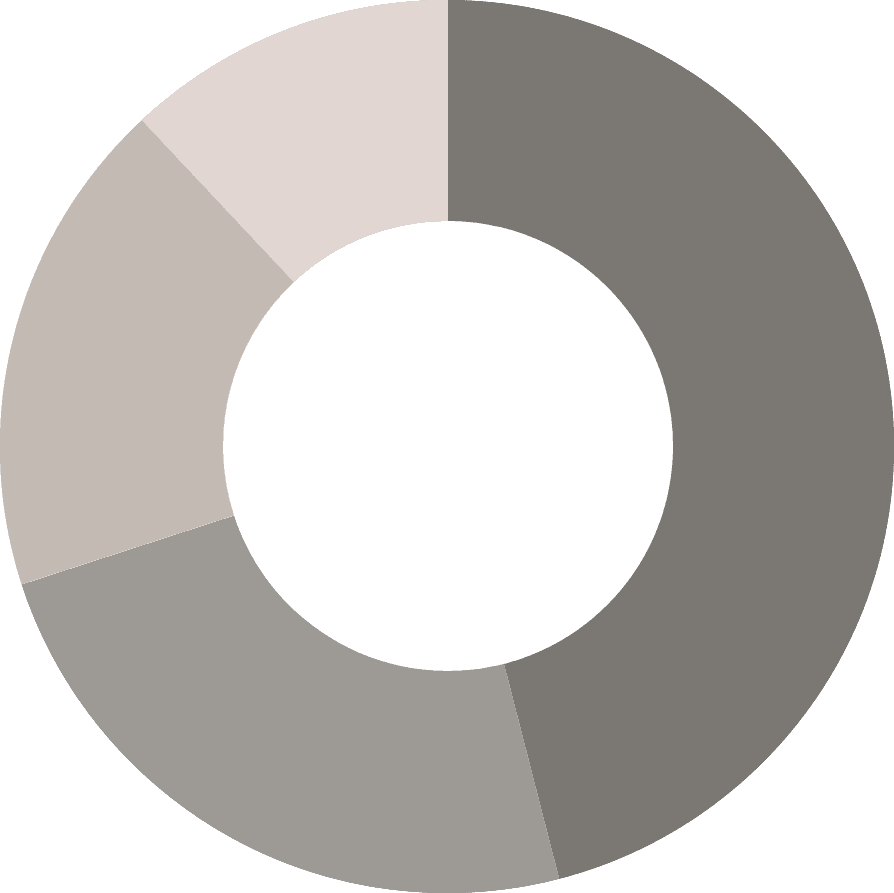
1) When do you usually feel the need for emotional support?
During stressful work/study periods— 46%
Late at night — 24%
After conflicts or difficult conversations— 18%
I rarely seek support — 12%
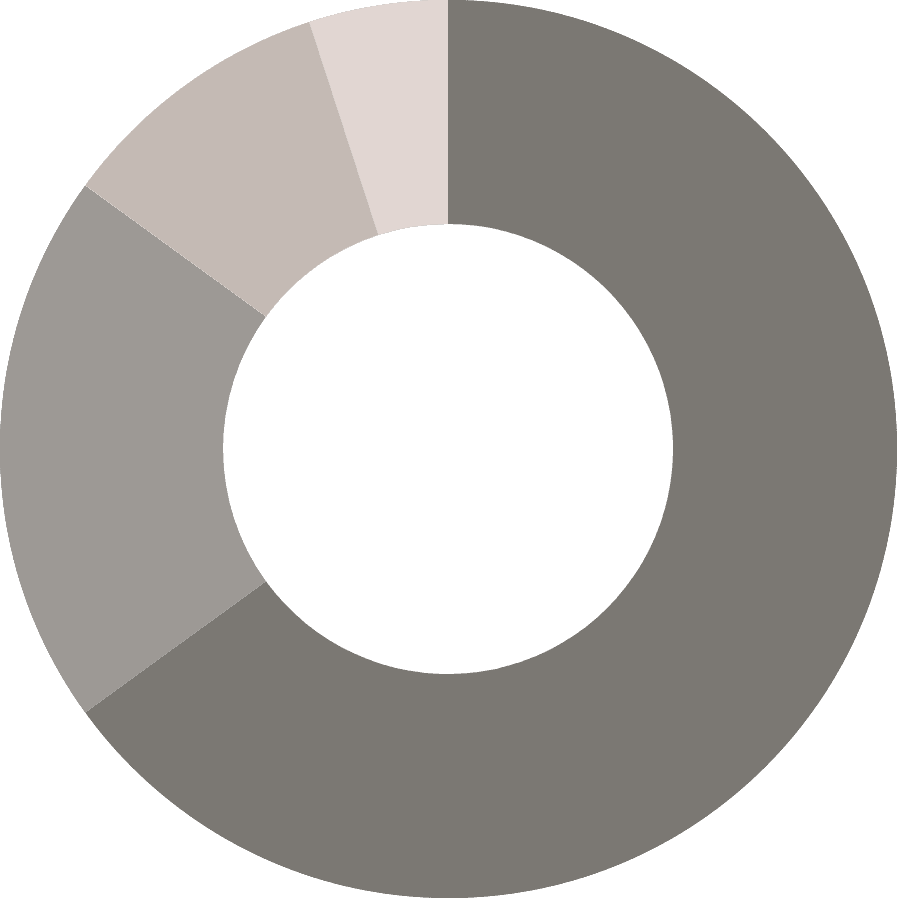
2) How comfortable are you talking about your emotions with others?
Somewhat comfortable — 40%
Not very comfortable — 34%
Very comfortable — 16%
Not comfortable at all — 10%

3) What prevents you from seeking professional therapy?
Cost — 38%
Time/scheduling constraints — 27%
I’m unsure where to start — 21%
Stigma or discomfort — 14%

4) How often do you track or reflect on your mood?
Occasionally — 42%
Rarely — 30%
Frequently — 18%
Never — 10%

5) What would make you consistently use a mental health app?
Personalised insights about my patterns — 44%
Short daily check-ins (under 3 minutes) — 26%
Progress visualisation — 18%
Gentle reminders — 12%
6) How important is personalisation in emotional support tools?
Very important — 52%
Important — 33%
Neutral — 10%
Not important — 5%
3) What prevents you from seeking professional therapy?
Cost — 38%
Time/scheduling constraints — 27%
I’m unsure where to start — 21%
Stigma or discomfort — 14%
4) How often do you track or reflect on your mood?
Occasionally — 42%
Rarely — 30%
Frequently — 18%
Never — 10%
Empathy map
I created an aggregated empathy map to synthesize insights from multiple interviews and identify common behaviors, motivations, and emotional needs among potential MoodMate users.
I created an aggregated empathy map to synthesize insights from multiple interviews and identify common behaviors, motivations, and emotional needs among potential MoodMate users.
Says

“I wish I had someone to talk to when I feel overwhelmed.”
“Therapy is helpful but it’s expensive and hard to schedule.”
“I want to understand why my mood changes so often.”
“Short check-ins would be easier to keep up with than long journaling.”
Feels

Overwhelmed during stressful work or study periods.
Hesitant to open up about emotions with others.
Frustrated when stress builds up without understanding why.
Motivated when they can see personal progress or emotional improvement.
Does

Reflects on emotions occasionally, usually during stressful moments.
Searches online for advice or coping strategies.
Uses reminders, journaling, or mood-tracking apps inconsistently.
Looks for quick, low-effort ways to manage stress.
Thinks

“Maybe my stress isn’t serious enough for therapy.”
“I don’t always feel comfortable sharing my emotions with people.”
“If an app could help me understand my patterns, that would be useful.”
“I want support, but it needs to feel private and safe.”
/
/
Designing a Personalized AI Mental Health App to Improve Emotional Self-Care Consistency
Designing a Personalized AI Mental Health App to Improve Emotional Self-Care Consistency
Designing a Personalized AI Mental Health App to Improve Emotional Self-Care Consistency
MoodMate is an AI-powered therapy app designed to provide empathetic, real-time mental health support through daily check-ins, mood tracking, and personalized insights. It helps users build consistent self-care habits, gain emotional clarity, and access affordable support anytime they need it.
Project type: Personal / Concept
My role: UX Designer (End-to-end)
Timeline: 4 weeks
Tools: Figma
Designing a Personalized AI Mental Health App to Improve Emotional Self-Care Consistency
MoodMate is an AI-powered therapy app designed to provide empathetic, real-time mental health support through daily check-ins, mood tracking, and personalized insights. It helps users build consistent self-care habits, gain emotional clarity, and access affordable support anytime they need it.
Project type: Personal / Concept
My role: UX Designer (End-to-end)
Timeline: 4 weeks
Tools: Figma
Problem Statement
Process
I followed a human-centered, iterative process to ensure the solution was grounded in real user needs and continuously validated through testing—especially important in a sensitive domain like mental health.
I followed a human-centered, iterative process to ensure the solution was grounded in real user needs and continuously validated through testing—especially important in a sensitive domain like mental health.
Goal:
Help people with mild–moderate mental health struggles build a consistent self-care routine.
Primary user pain:
consistency + emotional tracking + affordability barriers
What I designed:
AI-guided check-ins + mood tracking + tailored recommendations
How success is measured:
activation, weekly retention, check-in completion, perceived helpfulness
Empathise
Research
User Interviews
I conducted 1:1 semi-structured interviews to understand the emotional context behind users’ self-care behaviors — specifically how they manage stress, what prevents consistency, and how they perceive AI-driven support. Because mental health is highly personal, I needed qualitative insights to uncover motivations, trust concerns, and emotional patterns that quantitative data alone could not reveal.
I conducted 1:1 semi-structured interviews to understand the emotional context behind users’ self-care behaviors — specifically how they manage stress, what prevents consistency, and how they perceive AI-driven support. Because mental health is highly personal, I needed qualitative insights to uncover motivations, trust concerns, and emotional patterns that quantitative data alone could not reveal.
Do you currently use any mental health or therapy apps?
What motivates you to use a mental health app?
How often do you reflect on your emotions intentionally?
What is your biggest barrier to consistent self-care?
What makes a mental health app feel “helpful”?
What makes you stop using a mental health app?
Would you feel comfortable talking to an AI about your emotions?
What features are most important in a mental health app?
How important is privacy when using a mental health app?
If an app helped you reflect consistently for 4 weeks, would you continue using it?
Do you currently use any mental health or therapy apps?
What motivates you to use a mental health app?
How often do you reflect on your emotions intentionally?
What is your biggest barrier to consistent self-care?
What makes a mental health app feel “helpful”?
What makes you stop using a mental health app?
Would you feel comfortable talking to an AI about your emotions?
What features are most important in a mental health app?
How important is privacy when using a mental health app?
If an app helped you reflect consistently for 4 weeks, would you continue using it?
Key insights
Emotional Support Is Desired — But Consistency Is the Real Struggle
Generic Advice Quickly Breaks Trust
Privacy and Emotional Safety Are Non-Negotiable
Users Prefer Low-Effort Emotional Check-Ins
Progress Visibility Increases Motivation
User survey
After identifying initial themes from interviews, I ran a survey to validate whether these behaviors and challenges were common across a larger group of users. The survey helped quantify patterns such as when users most often seek emotional support, how comfortable they feel discussing emotions, and what factors prevent them from seeking professional therapy. These insights helped prioritize features like personalized insights, short daily check-ins, and progress tracking.
After identifying initial themes from interviews, I ran a survey to validate whether these behaviors and challenges were common across a larger group of users. The survey helped quantify patterns such as when users most often seek emotional support, how comfortable they feel discussing emotions, and what factors prevent them from seeking professional therapy. These insights helped prioritize features like personalized insights, short daily check-ins, and progress tracking.
1) When do you usually feel the need for emotional support?
During stressful work/study periods— 46%
Late at night — 24%
After conflicts or difficult conversations— 18%
I rarely seek support — 12%
2) How comfortable are you talking about your emotions with others?
Somewhat comfortable — 40%
Not very comfortable — 34%
Very comfortable — 16%
Not comfortable at all — 10%
3) What prevents you from seeking professional therapy?
Cost — 38%
Time/scheduling constraints — 27%
I’m unsure where to start — 21%
Stigma or discomfort — 14%
4) How often do you track or reflect on your mood?
Occasionally — 42%
Rarely — 30%
Frequently — 18%
Never — 10%
5) What would make you consistently use a mental health app?
Personalised insights about my patterns — 44%
Short daily check-ins (under 3 minutes) — 26%
Progress visualisation — 18%
Gentle reminders — 12%
6) How important is personalisation in emotional support tools?
Very important — 52%
Important — 33%
Neutral — 10%
Not important — 5%
3) What prevents you from seeking professional therapy?
Cost — 38%
Time/scheduling constraints — 27%
I’m unsure where to start — 21%
Stigma or discomfort — 14%
4) How often do you track or reflect on your mood?
Occasionally — 42%
Rarely — 30%
Frequently — 18%
Never — 10%
Empathy map
I created an aggregated empathy map to synthesize insights from multiple interviews and identify common behaviors, motivations, and emotional needs among potential MoodMate users.
I created an aggregated empathy map to synthesize insights from multiple interviews and identify common behaviors, motivations, and emotional needs among potential MoodMate users.
Says
“I wish I had someone to talk to when I feel overwhelmed.”
“Therapy is helpful but it’s expensive and hard to schedule.”
“I want to understand why my mood changes so often.”
“Short check-ins would be easier to keep up with than long journaling.”
Feels
Overwhelmed during stressful work or study periods.
Hesitant to open up about emotions with others.
Frustrated when stress builds up without understanding why.
Motivated when they can see personal progress or emotional improvement.
Does
Reflects on emotions occasionally, usually during stressful moments.
Searches online for advice or coping strategies.
Uses reminders, journaling, or mood-tracking apps inconsistently.
Looks for quick, low-effort ways to manage stress.
Thinks
“Maybe my stress isn’t serious enough for therapy.”
“I don’t always feel comfortable sharing my emotions with people.”
“If an app could help me understand my patterns, that would be useful.”
“I want support, but it needs to feel private and safe.”
/
/
Designing a Personalized AI Mental Health App to Improve Emotional Self-Care Consistency
Designing a Personalized AI Mental Health App to Improve Emotional Self-Care Consistency
Designing a Personalized AI Mental Health App to Improve Emotional Self-Care Consistency
MoodMate is an AI-powered therapy app designed to provide empathetic, real-time mental health support through daily check-ins, mood tracking, and personalized insights. It helps users build consistent self-care habits, gain emotional clarity, and access affordable support anytime they need it.
Project type: Personal / Concept
My role: UX Designer (End-to-end)
Timeline: 4 weeks
Tools: Figma
Designing a Personalized AI Mental Health App to Improve Emotional Self-Care Consistency
MoodMate is an AI-powered therapy app designed to provide empathetic, real-time mental health support through daily check-ins, mood tracking, and personalized insights. It helps users build consistent self-care habits, gain emotional clarity, and access affordable support anytime they need it.
Project type: Personal / Concept
My role: UX Designer (End-to-end)
Timeline: 4 weeks
Tools: Figma
Problem Statement
Process
I followed a human-centered, iterative process to ensure the solution was grounded in real user needs and continuously validated through testing—especially important in a sensitive domain like mental health.
I followed a human-centered, iterative process to ensure the solution was grounded in real user needs and continuously validated through testing—especially important in a sensitive domain like mental health.
Goal:
Help people with mild–moderate mental health struggles build a consistent self-care routine.
Primary user pain:
consistency + emotional tracking + affordability barriers
What I designed:
AI-guided check-ins + mood tracking + tailored recommendations
How success is measured:
activation, weekly retention, check-in completion, perceived helpfulness
Empathise
Research
User Interviews
I conducted 1:1 semi-structured interviews to understand the emotional context behind users’ self-care behaviors — specifically how they manage stress, what prevents consistency, and how they perceive AI-driven support. Because mental health is highly personal, I needed qualitative insights to uncover motivations, trust concerns, and emotional patterns that quantitative data alone could not reveal.
I conducted 1:1 semi-structured interviews to understand the emotional context behind users’ self-care behaviors — specifically how they manage stress, what prevents consistency, and how they perceive AI-driven support. Because mental health is highly personal, I needed qualitative insights to uncover motivations, trust concerns, and emotional patterns that quantitative data alone could not reveal.
Do you currently use any mental health or therapy apps?
What motivates you to use a mental health app?
How often do you reflect on your emotions intentionally?
What is your biggest barrier to consistent self-care?
What makes a mental health app feel “helpful”?
What makes you stop using a mental health app?
Would you feel comfortable talking to an AI about your emotions?
What features are most important in a mental health app?
How important is privacy when using a mental health app?
If an app helped you reflect consistently for 4 weeks, would you continue using it?
Do you currently use any mental health or therapy apps?
What motivates you to use a mental health app?
How often do you reflect on your emotions intentionally?
What is your biggest barrier to consistent self-care?
What makes a mental health app feel “helpful”?
What makes you stop using a mental health app?
Would you feel comfortable talking to an AI about your emotions?
What features are most important in a mental health app?
How important is privacy when using a mental health app?
If an app helped you reflect consistently for 4 weeks, would you continue using it?
Key insights
Emotional Support Is Desired — But Consistency Is the Real Struggle
Generic Advice Quickly Breaks Trust
Privacy and Emotional Safety Are Non-Negotiable
Users Prefer Low-Effort Emotional Check-Ins
Progress Visibility Increases Motivation
User survey
After identifying initial themes from interviews, I ran a survey to validate whether these behaviors and challenges were common across a larger group of users. The survey helped quantify patterns such as when users most often seek emotional support, how comfortable they feel discussing emotions, and what factors prevent them from seeking professional therapy. These insights helped prioritize features like personalized insights, short daily check-ins, and progress tracking.
After identifying initial themes from interviews, I ran a survey to validate whether these behaviors and challenges were common across a larger group of users. The survey helped quantify patterns such as when users most often seek emotional support, how comfortable they feel discussing emotions, and what factors prevent them from seeking professional therapy. These insights helped prioritize features like personalized insights, short daily check-ins, and progress tracking.
1) When do you usually feel the need for emotional support?
During stressful work/study periods— 46%
Late at night — 24%
After conflicts or difficult conversations— 18%
I rarely seek support — 12%
2) How comfortable are you talking about your emotions with others?
Somewhat comfortable — 40%
Not very comfortable — 34%
Very comfortable — 16%
Not comfortable at all — 10%
3) What prevents you from seeking professional therapy?
Cost — 38%
Time/scheduling constraints — 27%
I’m unsure where to start — 21%
Stigma or discomfort — 14%
4) How often do you track or reflect on your mood?
Occasionally — 42%
Rarely — 30%
Frequently — 18%
Never — 10%
5) What would make you consistently use a mental health app?
Personalised insights about my patterns — 44%
Short daily check-ins (under 3 minutes) — 26%
Progress visualisation — 18%
Gentle reminders — 12%
6) How important is personalisation in emotional support tools?
Very important — 52%
Important — 33%
Neutral — 10%
Not important — 5%
3) What prevents you from seeking professional therapy?
Cost — 38%
Time/scheduling constraints — 27%
I’m unsure where to start — 21%
Stigma or discomfort — 14%
4) How often do you track or reflect on your mood?
Occasionally — 42%
Rarely — 30%
Frequently — 18%
Never — 10%
Empathy map
I created an aggregated empathy map to synthesize insights from multiple interviews and identify common behaviors, motivations, and emotional needs among potential MoodMate users.
I created an aggregated empathy map to synthesize insights from multiple interviews and identify common behaviors, motivations, and emotional needs among potential MoodMate users.
Says
“I wish I had someone to talk to when I feel overwhelmed.”
“Therapy is helpful but it’s expensive and hard to schedule.”
“I want to understand why my mood changes so often.”
“Short check-ins would be easier to keep up with than long journaling.”
Feels
Overwhelmed during stressful work or study periods.
Hesitant to open up about emotions with others.
Frustrated when stress builds up without understanding why.
Motivated when they can see personal progress or emotional improvement.
Does
Reflects on emotions occasionally, usually during stressful moments.
Searches online for advice or coping strategies.
Uses reminders, journaling, or mood-tracking apps inconsistently.
Looks for quick, low-effort ways to manage stress.
Thinks
“Maybe my stress isn’t serious enough for therapy.”
“I don’t always feel comfortable sharing my emotions with people.”
“If an app could help me understand my patterns, that would be useful.”
“I want support, but it needs to feel private and safe.”
/
/
Designing a Personalized AI Mental Health App to Improve Emotional Self-Care Consistency
Designing a Personalized AI Mental Health App to Improve Emotional Self-Care Consistency
Designing a Personalized AI Mental Health App to Improve Emotional Self-Care Consistency
MoodMate is an AI-powered therapy app designed to provide empathetic, real-time mental health support through daily check-ins, mood tracking, and personalized insights. It helps users build consistent self-care habits, gain emotional clarity, and access affordable support anytime they need it.
Project type: Personal / Concept
My role: UX Designer (End-to-end)
Timeline: 4 weeks
Tools: Figma
Designing a Personalized AI Mental Health App to Improve Emotional Self-Care Consistency
MoodMate is an AI-powered therapy app designed to provide empathetic, real-time mental health support through daily check-ins, mood tracking, and personalized insights. It helps users build consistent self-care habits, gain emotional clarity, and access affordable support anytime they need it.
Project type: Personal / Concept
My role: UX Designer (End-to-end)
Timeline: 4 weeks
Tools: Figma
Problem Statement
Process
I followed a human-centered, iterative process to ensure the solution was grounded in real user needs and continuously validated through testing—especially important in a sensitive domain like mental health.
I followed a human-centered, iterative process to ensure the solution was grounded in real user needs and continuously validated through testing—especially important in a sensitive domain like mental health.
Goal:
Help people with mild–moderate mental health struggles build a consistent self-care routine.
Primary user pain:
consistency + emotional tracking + affordability barriers
What I designed:
AI-guided check-ins + mood tracking + tailored recommendations
How success is measured:
activation, weekly retention, check-in completion, perceived helpfulness
Empathise
Research
User Interviews
I conducted 1:1 semi-structured interviews to understand the emotional context behind users’ self-care behaviors — specifically how they manage stress, what prevents consistency, and how they perceive AI-driven support. Because mental health is highly personal, I needed qualitative insights to uncover motivations, trust concerns, and emotional patterns that quantitative data alone could not reveal.
I conducted 1:1 semi-structured interviews to understand the emotional context behind users’ self-care behaviors — specifically how they manage stress, what prevents consistency, and how they perceive AI-driven support. Because mental health is highly personal, I needed qualitative insights to uncover motivations, trust concerns, and emotional patterns that quantitative data alone could not reveal.
Do you currently use any mental health or therapy apps?
What motivates you to use a mental health app?
How often do you reflect on your emotions intentionally?
What is your biggest barrier to consistent self-care?
What makes a mental health app feel “helpful”?
What makes you stop using a mental health app?
Would you feel comfortable talking to an AI about your emotions?
What features are most important in a mental health app?
How important is privacy when using a mental health app?
If an app helped you reflect consistently for 4 weeks, would you continue using it?
Do you currently use any mental health or therapy apps?
What motivates you to use a mental health app?
How often do you reflect on your emotions intentionally?
What is your biggest barrier to consistent self-care?
What makes a mental health app feel “helpful”?
What makes you stop using a mental health app?
Would you feel comfortable talking to an AI about your emotions?
What features are most important in a mental health app?
How important is privacy when using a mental health app?
If an app helped you reflect consistently for 4 weeks, would you continue using it?
Key insights
Emotional Support Is Desired — But Consistency Is the Real Struggle
Generic Advice Quickly Breaks Trust
Privacy and Emotional Safety Are Non-Negotiable
Users Prefer Low-Effort Emotional Check-Ins
Progress Visibility Increases Motivation
User survey
After identifying initial themes from interviews, I ran a survey to validate whether these behaviors and challenges were common across a larger group of users. The survey helped quantify patterns such as when users most often seek emotional support, how comfortable they feel discussing emotions, and what factors prevent them from seeking professional therapy. These insights helped prioritize features like personalized insights, short daily check-ins, and progress tracking.
After identifying initial themes from interviews, I ran a survey to validate whether these behaviors and challenges were common across a larger group of users. The survey helped quantify patterns such as when users most often seek emotional support, how comfortable they feel discussing emotions, and what factors prevent them from seeking professional therapy. These insights helped prioritize features like personalized insights, short daily check-ins, and progress tracking.
1) When do you usually feel the need for emotional support?
During stressful work/study periods— 46%
Late at night — 24%
After conflicts or difficult conversations— 18%
I rarely seek support — 12%
2) How comfortable are you talking about your emotions with others?
Somewhat comfortable — 40%
Not very comfortable — 34%
Very comfortable — 16%
Not comfortable at all — 10%
3) What prevents you from seeking professional therapy?
Cost — 38%
Time/scheduling constraints — 27%
I’m unsure where to start — 21%
Stigma or discomfort — 14%
4) How often do you track or reflect on your mood?
Occasionally — 42%
Rarely — 30%
Frequently — 18%
Never — 10%
5) What would make you consistently use a mental health app?
Personalised insights about my patterns — 44%
Short daily check-ins (under 3 minutes) — 26%
Progress visualisation — 18%
Gentle reminders — 12%
6) How important is personalisation in emotional support tools?
Very important — 52%
Important — 33%
Neutral — 10%
Not important — 5%
3) What prevents you from seeking professional therapy?
Cost — 38%
Time/scheduling constraints — 27%
I’m unsure where to start — 21%
Stigma or discomfort — 14%
4) How often do you track or reflect on your mood?
Occasionally — 42%
Rarely — 30%
Frequently — 18%
Never — 10%
Empathy map
I created an aggregated empathy map to synthesize insights from multiple interviews and identify common behaviors, motivations, and emotional needs among potential MoodMate users.
I created an aggregated empathy map to synthesize insights from multiple interviews and identify common behaviors, motivations, and emotional needs among potential MoodMate users.
Says
“I wish I had someone to talk to when I feel overwhelmed.”
“Therapy is helpful but it’s expensive and hard to schedule.”
“I want to understand why my mood changes so often.”
“Short check-ins would be easier to keep up with than long journaling.”
Feels
Overwhelmed during stressful work or study periods.
Hesitant to open up about emotions with others.
Frustrated when stress builds up without understanding why.
Motivated when they can see personal progress or emotional improvement.
Does
Reflects on emotions occasionally, usually during stressful moments.
Searches online for advice or coping strategies.
Uses reminders, journaling, or mood-tracking apps inconsistently.
Looks for quick, low-effort ways to manage stress.
Thinks
“Maybe my stress isn’t serious enough for therapy.”
“I don’t always feel comfortable sharing my emotions with people.”
“If an app could help me understand my patterns, that would be useful.”
“I want support, but it needs to feel private and safe.”